.png)


Birth Preparation Guide for Chronic Illness and Complex Health Conditions
How I prepared for labour, what actually happened, what I would do differently - and the practical resources I created along the way.
There is so much information about preparing for birth.
But there is considerably less information about preparing for birth when your body already requires a little more thought...
If you live with chronic illness, disability, allergies, chronic pain, joint instability, medication sensitivities, autonomic problems, previous medical trauma - or simply have a pregnancy that has become more medically complicated - you may find yourself trying to prepare for two births at once.
The birth you hope to have.
And the birth you need a plan for if everything changes.
That was very much my experience.
I went into pregnancy incredibly excited about birth. I had spent months learning about hypnobirthing, nervous-system regulation, physiological labour, movement, positioning, breathing and ways of creating an environment that would help me feel safe enough to let my body do what it needed to do.
At the same time, I knew that because of my health conditions, allergies and previous reactions to medications and medical products, I couldn't simply arrive at hospital and assume that the standard pathway would work for me.
So I prepared.
A lot.
And although my actual birth ended up looking almost nothing like the birth I originally imagined, I am so glad that I did.
There are also several things I understand completely differently now that I have actually been through induction, labour, an emergency Caesarean and a complicated hospital stay.
This guide is everything I would tell someone preparing to give birth with a more complex medical picture.
Not because your birth needs to be controlled down to the smallest detail.
Quite the opposite.
The aim is to prepare enough that when things change, you still have choices, information and a voice.

First: a birth plan is not about planning exactly how your birth will happen
I think the term birth plan can be slightly misleading.
You cannot plan exactly how labour will unfold.
What you can plan is how you would like to be treated while it unfolds.
You can identify the things that matter most to you.
You can flag medical information that somebody needs to know quickly.
You can think through decisions before you are exhausted, frightened, contracting or being rushed into theatre.
And you can make it much easier for your partner to advocate for you when you are not in the headspace to explain everything yourself.
My own birth plan eventually became much more than a list of preferences.
The first page was essentially a rapid handover sheet: medical safety alerts, handling and positioning, pain relief considerations, the environment, consent, birth preferences, newborn preferences and where staff should look if an emergency occurred.
Then I had separate pages for things like:
-
emergency and anaesthetic considerations
-
escalation if the planned birth setting changed
-
products I could safely tolerate
-
medication information
-
what we had brought from home
-
playlists and hypnobirthing tracks
-
where important things were packed
That became incredibly useful because one sheet never could have contained everything safely.
The most important lesson?
Keep the first page short.
A midwife walking into the room does not need to read your life story.
They need to immediately see:
-
What could harm you.
-
What they should avoid.
-
How they should handle you.
-
What matters to you.
-
Where to look if they need more information.
Then keep the more complicated information behind it.
FREE EDITABLE RESOURCE
I have turned the structure of my own plan into a completely general version, with no personal medical details included.

What I would put on a complex-health birth plan
Everyone's medical situation will be different, but I would now think about the plan in layers.
1. The things staff absolutely need to know
Think about anything that could change your care immediately.
This might include:
-
serious allergies
-
medication reactions
-
conditions affecting blood pressure or heart rate
-
bleeding/clotting conditions
-
diabetes
-
asthma
-
mobility limitations
-
joint or spinal instability
-
sensory or communication needs
-
previous anaesthetic complications
-
anything affecting positioning
-
anything requiring specialist equipment
-
products you cannot tolerate
Do not assume that because something is written elsewhere in your medical notes, the person walking into your room will have seen it.
Make the important things easy to find.
2. Movement and positioning
This was particularly important for me, but it can matter for many conditions.
If there are positions that could hurt or injure you, write them down.
Likewise, write down what does work.
My own plan specifically separated preferred positions from movements that needed to be avoided, and asked staff not to move my limbs without consent.
Your version might say things like:
Please support:
hips / pelvis / knees / neck / spine / shoulders
Please avoid:
forced leg opening / prolonged lithotomy / lying completely flat / unsupported joints
Positions I generally tolerate:
side lying / upright / leaning forward / birth ball / supported standing / water
This is also something worth discussing antenatally with your physiotherapist, midwife, obstetrician or anaesthetist if relevant.
3. Pain relief - including what happens if Plan A stops working
This is one area where my thinking changed enormously.
Before birth, my plan was essentially:
Try to do as much of labour without pharmacological pain relief as possible.
I had reasons for that.
I live with chronic pain.
I have had previous medication reactions.
I have spinal instability.
I was concerned about an epidural being technically difficult and about complications such as multiple attempts or a post-dural puncture headache.
And philosophically, I was genuinely fascinated by labour.
Women have given birth for millennia.
I loved the idea of it being something primal and transformative.
I wanted to experience what my body could do.
What I didn't appreciate enough was that there is a huge difference between saying:
“I would prefer to avoid an epidural during straightforward spontaneous labour.”
and saying:
“I would prefer to avoid an epidural regardless of what labour becomes.”
I would never make that second plan now.
My generic birth-plan template therefore includes a pain-relief escalation point, not simply a list of things somebody wants to avoid.
That distinction matters...

Chronic pain made me curious about labour pain
This might sound strange, but one of the things I was most excited about during pregnancy was experiencing labour.
When you live with chronic pain, pain becomes a very odd thing psychologically.
Sometimes you become exceptionally good at functioning through it.
Sometimes your nervous system becomes exceptionally bad at tolerating more of it.
Both can be true.
I wondered whether going through something as intense as childbirth could almost recalibrate my relationship with pain.
Could I come out the other side thinking:
If I did that, perhaps I can cope with this.
There were aspects of that theory that I still think were valuable.
During contractions I kept reminding myself that pain itself is part of being alive.
That contrast is part of what allows us to experience pleasure, safety and relief.
I reminded myself:
-
This is temporary.
-
I only have to do this contraction.
-
Every contraction ends.
-
Every wave is bringing me closer to my baby.
And perhaps most importantly:
Do not create more pain by fighting the pain you already have.
That is the part I still use now.
When pain hits, the instinct is to brace.
-
Jaw clenched.
-
Shoulders up.
-
Hands tight.
-
Entire body contracted.
But then you are dealing with the original pain plus all the pain and fatigue created by guarding against it.
One of the most useful things hypnobirthing taught me was simply:
soften.
Not because relaxing magically removes pain.
But because adding unnecessary muscular tension rarely helps.
My affirmation sheet actually contained reminders such as “I soften my jaw”, “I drop my shoulders”, “I release my hands” and “I do not need to fight the wave.”
That has become one of the few labour techniques I think translates beautifully into chronic-pain management outside birth too.

And then I experienced the oxytocin drip
This is where I would prepare very differently next time.
I had an induction. Eventually I reached the synthetic oxytocin / Syntocinon drip.
I stayed on it for around seven hours.
For much of that period I had contractions roughly two minutes apart, and because I was also experiencing back labour, I would often have another smaller wave of pain between the main contractions.
There was very little real break. Seconds, if that...
I used my TENS machine, breathing, hypnobirthing strategies and eventually paracetamol.
And after those hours of intense contractions?
I had progressed only around half a centimetre.
That was the moment my relationship with the idea of labour pain changed.
It had stopped being:
Can I experience this?
and became:
What exactly am I achieving by continuing to experience this?
If somebody told me tomorrow that I had to do the same thing again, knowing what I know now, I would have a very different pain-relief conversation.
I would still consider my spinal and medication risks.
But I would weigh those risks against exhaustion, prolonged severe pain, nervous-system overload and how much labour might still be ahead.
I would not view using an epidural as somehow less brave.
That idea disappeared very quickly.
You do not earn anything by suffering unnecessarily.
Pain relief does not make your birth less impressive.
It does not mean hypnobirthing failed.
It does not mean you failed.
It simply means the circumstances changed and you responded to them...

Hypnobirthing was still worth doing - even though I had an emergency C-section
I want to make this distinction because sometimes hypnobirthing is marketed almost as though the goal is to achieve a silent, candlelit, intervention-free birth.
That isn't how I see it anymore.
Hypnobirthing helped me immensely.
It just didn't give me the birth I had imagined.
What it gave me was a toolkit.
Breathing.
Anchoring.
Music.
Visualisation.
Understanding the effect that fear and adrenaline can have on the body.
Being reminded to soften rather than brace.
And having language that Rob could use when I couldn't think clearly myself.
My affirmations weren't only things for me to read.
I had an entire section written for my birth partner - what to say if I needed grounding, if I said I couldn't do it, if I needed to surrender into the contraction, and when we were getting close to meeting the baby.
That was one of the best preparation exercises we did.
Because your partner doesn't have to improvise the perfect sentence while watching someone they love go through something enormous.
You can tell them beforehand what words make you feel safe.
My favourite breathing principle
I usually focused on a longer exhale
.
For example:
In for 4.
Out for 6–8.
Not because there is anything magical about those exact numbers.
Just because a slow exhale gave me something to follow.
My little adrenaline reset also included:
move → empty your bladder → get supported → soften → long exhale → breathe slowly.
That became its own one-page visual in my preparation pack.

Meditation, hypnobirthing & birth audio
Music was only one part of how I prepared for birth.
I also used guided meditations, hypnobirthing tracks and calming audio to practise getting into the kind of mental state I wanted to be able to return to during labour.
For me, this wasn't about pretending birth wouldn't hurt or trying to meditate my way into a perfect experience.
It was about practising:
-
softening instead of bracing
-
slowing my breathing
-
coming back to my body
-
reducing adrenaline where possible
-
having something familiar to focus on when things felt intense
My Insight Timer collections
I created two collections on Insight Timer containing the meditations, hypnobirthing tracks and audio I used during pregnancy and birth preparation.
Birth
Birth preparation
I would recommend actually using your birth-preparation tracks during pregnancy rather than saving everything for labour.
The more familiar a particular voice, meditation or breathing pattern becomes, the less mental effort it takes to return to it when you are tired, uncomfortable or overwhelmed.
I also made Spotify playlists for different stages and moods of birth
Something else I found useful was not relying on one enormous “labour playlist”.
Different parts of birth can feel completely different.
At one moment you might want something incredibly gentle and repetitive.
Later you might want music that feels powerful, primal or cinematic.
And if the birth changes completely, you may want something else again.
So I built several different Spotify playlists that I could move between depending on what I needed.
C-Section – Birth
A separate playlist for the possibility of Caesarean birth.
I actually think this is worth preparing even if a Caesarean is nowhere near your preferred birth plan.
If plans suddenly change, having familiar music ready means one small part of the environment can still belong to you.
Final Pushes & Golden Hour – Birth
Music chosen for the final stage of labour, meeting baby and those first moments afterwards.
Ambient Electronic – Birth
For familiar, spacious electronic music when I wanted something atmospheric without necessarily using a guided meditation.
Handpan – Birth
For when I wanted repetitive, calming handpan sounds.
Primal Ancestral – Birth
This was for the version of labour where I wanted to lean into the slightly wild, primal side of birth rather than trying to make everything feel serene.
You can see from my original birth-preparation pack that I had deliberately organised audio by use, rather than simply collecting songs.
A tip I would now give anyone
Think less about creating the perfect birth playlist and more about creating a small audio toolkit.
You might have:
-
one playlist for resting and early labour
-
one for active labour
-
something rhythmic or primal for movement
-
guided hypnobirthing or meditations
-
a Caesarean/theatre playlist
-
something specifically chosen for meeting baby and the golden hour
And download them offline.
Hospital Wi-Fi is not something I would want to be relying on!

FREE PRINTABLE: Birth affirmations + partner prompts
I am leaving these fairly close to the ones I personally used because I think this resource works beautifully as it is.
It includes:
-
affirmations for the birthing parent
-
phrases a partner can use for grounding
-
phrases for the “I can't do this” moment
-
prompts for surrendering and softening
-
words for transition/meeting baby
-
an adrenaline reset
-
affirmations for induced or medical birth
You can find a printable PDF or an editable pptx that you can amend in powerpoint or canva.


The thing I was least prepared for: what induction can actually be like
This is probably the biggest thing I wish somebody had properly explained to me before birth.
I knew induction could take time.
I don't think I truly understood what time meant.
Because when someone says:
“It can take a few days.”
you might imagine:
come into hospital
have the induction
wait around
go into labour.
What I hadn't fully appreciated was that the waiting itself can become physically and mentally exhausting.
In my case, the process lasted days.
I had repeated monitoring.
Repeated examinations.
Very disrupted sleep.
Periods of painful early-labour contractions.
Then more interventions.
Then eventually the oxytocin drip.
By the time we reached the part most people would traditionally think of as labour, I was already exhausted.
1. Induction may be much longer than you imagine
The paperwork I had seen suggested that induction might involve several nights.
Mine ultimately became roughly a week-long process before my baby was born.
That doesn't mean everyone will have that experience.
Many inductions are considerably quicker.
But if you are preparing for one, I would prepare logistically for the possibility that it isn't.
Pack for comfort, not just birth.
Think about:
chargers
food
your partner's food
headphones
eye mask
a fan
layers
pillows
something to make a hospital room feel tolerable
anything needed for your condition
your daily medication
things that help you regulate your nervous system
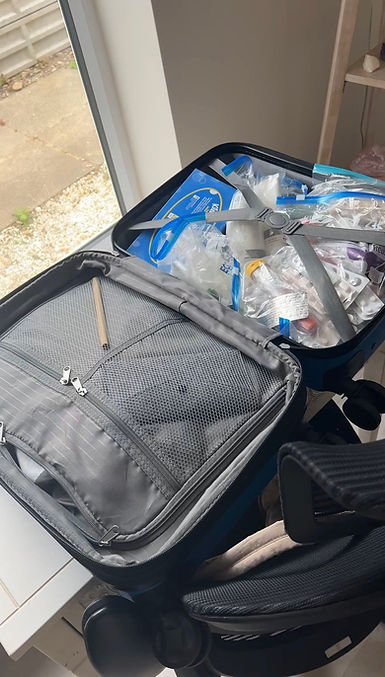
My own bag map ended up being ridiculously detailed because there were so many medical and comfort items that Rob might need to find quickly.
I actually think a “where is everything?” sheet is an underrated birth-preparation tool.
When you are contracting, you do not want somebody asking:
“Which black bag is the inhaler in?”
2. Sleep before labour matters more than I appreciated
This was enormous.
Because induction isn't necessarily:
rest → labour → baby.
It can be:
poor sleep → monitoring → contractions → monitoring → more poor sleep → procedure → more contractions → more monitoring → active labour.
A private room is not automatically restful either.
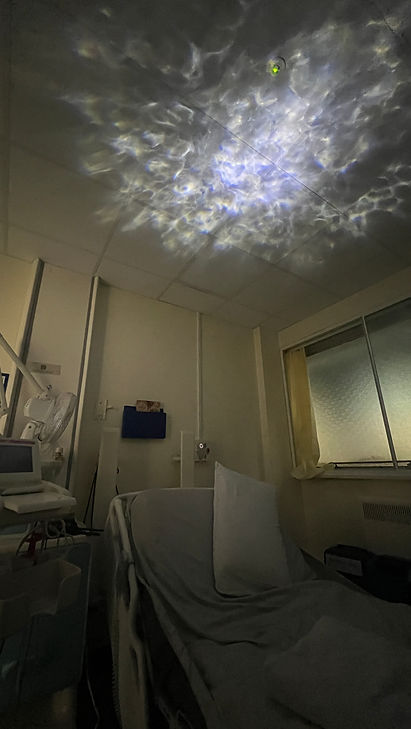
Mine was extremely hot, with very limited airflow.
A bay can have its own problems: noise, lights, other patients, observations and several people going through early labour around you.
I had mentally prepared for the pain of labour.
I had not given enough thought to entering that labour already sleep deprived.
If you are being induced, I would now put protecting sleep and energy surprisingly high on the priority list.
Ask:
-
Can observations be clustered where medically safe?
-
Can lights be reduced?
-
Can you use an eye mask/earplugs?
-
Can your partner protect quiet periods?
-
Can you ask what genuinely needs to happen overnight?
-
Is there somewhere cooler/quieter if you are struggling?
-
Can you discuss pain relief if contractions are preventing you from resting but labour is still very early?
Rest is not laziness.
It is fuel.
3. Understand what “starting induction” actually commits you to
This was one of my biggest misunderstandings.
I had imagined something like:
Try the balloon. If it doesn't work, perhaps I go home and wait another week or two for spontaneous labour.
The reality can be considerably more complicated.
The ability to pause, go home or stop depends on:
-
why you are being induced
-
which stage of induction you have reached
-
whether your waters have broken
-
baby's wellbeing
-
your wellbeing
-
your local hospital pathway
So before starting, ask very directly:
If this first step doesn't work, what happens next?
At what point can I still decide to stop and wait?
At what point would stopping no longer be recommended?
Would I be allowed home between stages?
What would change that?
Those are different questions from simply:
“How does induction work?”
And they may reveal information that meaningfully affects your decision.
4. Ask what happens once your waters are broken
Breaking the waters can sound like just another small step.
It changes things.
Once membranes have ruptured, infection risk becomes part of the conversation and your team may recommend a particular timeframe for labour to establish or for birth depending on your circumstances and local protocol.
So before artificial rupture of membranes, I would ask:
Why now?
What does doing this commit us to next?
What happens if contractions don't establish?
How does it change the option of waiting?
When would you recommend oxytocin?
How will infection risk be managed?
The important principle isn't “never have your waters broken”.
It is simply:
Know what door you are walking through before you walk through it.
5. Ask about vaginal examinations
Over a long induction, examinations can accumulate.
Sometimes they are clinically useful and necessary.
But you can still ask:
What information will this examination give us?
Will the result change the plan?
Has enough time passed for this to be useful?
Can we minimise examinations where possible?
My own birth plan explicitly said to ask before examinations, sweeps, artificial rupture of membranes and other interventions.
That seems obvious written down.
But when you have been in hospital for days, procedures can start to feel like things that simply happen to you.
I think one of the most important phrases in birth is:
“Can you tell me what you're going to do before you do it?”
6. Have a separate pain plan for the oxytocin drip
This is probably the biggest change I would personally make.
I wouldn't just write:
Pain relief preference: X.
I would write something like:
Spontaneous labour: try [preferred options].
If labour becomes prolonged / back labour / induction drip / severe exhaustion: reassess pain relief early.
Because those are different situations.
It also creates a conversation before you are in unbearable pain.
Your threshold might be:
-
before the drip starts
-
once contractions reach a certain intensity
-
if you cannot rest
-
after a certain number of hours
-
if you are no longer coping
-
if labour is progressing very slowly
-
if the medical plan changes
Your threshold doesn't have to be mine.
Just have one.
7. A slow induction isn't something you can “try harder” at
This was psychologically important for me.
After hours of intense contractions, I had barely dilated further.
That is incredibly demoralising if somewhere in your brain you have absorbed the idea that labour is a performance.
It isn't.
You cannot breathe your cervix into meeting a deadline.
You cannot earn dilation by being stoic.
You cannot prove anything by staying quiet.
And sometimes a body simply isn't responding to induction in the way everyone hoped.
One of the most helpful things somebody can say at that point is:
This is information, not failure.
QUESTIONS I WOULD ASK BEFORE AN INDUCTION NOW
You might want to screenshot this section.
Why?
Why is induction being recommended?
What is the specific risk we are trying to reduce?
How large is that risk for me?
What are the risks of induction?
What are the risks of waiting?
Timing
Why this date?
What changes if we wait 24 hours?
48 hours?
Several days?
What monitoring could we use if we wait?
My cervix
How favourable is my cervix currently?
What is my Bishop score?
Which induction method would you recommend first and why?
Logistics
Do I stay in hospital throughout?
Could any stage happen as an outpatient?
Can my partner stay?
What is the realistic range of timelines at this hospital?
What happens overnight?
Stopping
If the first method doesn't work, can I stop?
Could I go home?
At what stage would stopping no longer be recommended?
Waters
When would you recommend breaking my waters?
What changes once you do?
Oxytocin
When would the oxytocin drip be recommended?
What monitoring would I need?
What pain-relief options could I use?
Can we discuss an epidural before I reach the point of desperation?
Caesarean
At what point would we describe the induction as unsuccessful?
What would make a Caesarean the safer option?
Would there be a point where continuing the induction gives me very little benefit?
Create a “change of plan” plan
This is one of my favourite things from my original preparation.
I created a decision tree.
My original version started with the planned birth setting and then followed what should happen if circumstances changed - including transfer, complications, assisted birth, tear repair, Caesarean and immediate emergency.
The point wasn't to predict exactly what would happen.
It was to make escalation feel less like falling off a cliff.
You can think through:
If the birth centre is unavailable → what matters to me on labour ward?
If continuous monitoring is needed → what parts of my environment can stay the same?
If I need an epidural → what positioning or allergy information matters?
If I need theatre → who receives the baby if I can't?
If an assisted birth is proposed → do I want a quick discussion of forceps/ventouse versus Caesarean if there is time?
If it becomes a true emergency → what are the two or three things staff should still know?
This is the difference between having one ideal plan and having Plan A, B and C all still feel like your birth.
FREE EDITABLE RESOURCE

Use the BRAIN framework - but add one more question
You may already have seen the BRAIN decision-making framework:
B - Benefits
What are the benefits?
R - Risks
What are the risks?
A - Alternatives
What are the alternatives?
I - Intuition / information
What other information do I need? How do I feel?
N - Nothing / not now
What happens if we do nothing or wait?
I would add:
“Is this urgent?”
Because that one sentence changes everything.
If somebody says:
“Yes. We need to act now.”
then that is a completely different conversation.
But if the answer is:
“No, not immediately.”
you may have time to ask your questions.
My partner could then say:
“Can we have one minute together?”
That minute can be incredibly valuable.
Consent still matters when you have written a birth plan
A birth plan does not equal consent.
Writing “I am open to induction” doesn't mean every stage can happen without another conversation.
Writing “I am open to vaginal examinations” doesn't mean nobody needs to ask.
Writing “I will accept a Caesarean if required” does not mean you should not be told why it is being recommended unless the situation is truly too urgent.
And consent can change.
You can say yes.
You can say no.
You can ask for more information.
You can change your mind about pain relief.
You can change your mind about interventions you previously hoped to avoid.
The plan is not a contract with your pregnant self.
Give your birth partner an actual job description
This is another thing I would recommend to absolutely everyone.
“Be supportive” is too vague.
Your partner may be frightened too.
Give them jobs.
For example:
Environment
Dim the lights.
Put music on.
Reduce unnecessary conversation.
Keep the door closed where appropriate.
Keep water topped up.
Body
Remind me to unclench my jaw.
Help me reposition.
Use counter-pressure if I ask.
Pass me the TENS controls.
Communication
Ask staff to explain recommendations.
Ask whether something is urgent.
Ask for a minute to discuss.
Find the relevant page of my plan.
Medical information
Know where medications are.
Know where the allergy list is.
Know the major red flags.
Emotional
Do not tell me to “calm down”.
Tell me:
“You only need to do this breath.”
“I am here.”
“You don't have to do the whole labour right now.”
“Do you want me to ask for help?”
That is much easier to use when you've agreed it beforehand.
Consider a sign on the door
This started as something very specific to my allergies, but I think the concept is much more broadly useful.
You do not want every new person entering the room to require a five-minute explanation.
A simple door sign can communicate the room culture immediately.
Mine included things like keeping the environment dim and quiet, hypnobirthing, avoiding fragrance, asking before using products and handling me carefully because of joint instability.
For somebody else it might say:
Please knock and enter quietly.
Low-stimulation birth space.
Please ask before bringing students into the room.
Hearing impaired - face me when speaking.
Fragrance-free room.
Trauma-informed care - explain before touching.
Joint instability - please do not move legs without asking.
Keep it short.
It is a sign, not a second birth plan.

If you have allergies, MCAS or major product sensitivities
I could write an entire guide on this.
In fact, I have...
My birth preparation included identifying products I tolerated, bringing our own where appropriate, thinking about soaps, gels, tape, textiles and skin preparations, and putting this into a visual product sheet so staff didn't have to interpret vague wording like “sensitive skin”. My original pack even showed the exact products alongside their intended use.
If fragrance or product sensitivity is a major part of your hospital planning, I would use my separate guide because it goes into much more detail:
READ NEXT
Preparing for Hospital With MCAS / Severe Fragrance & Chemical Sensitivity
For a general birth plan, I would simply include a short safety alert and then point staff to a separate allergy/product sheet.
That keeps your front page readable.
Make a one-page product and medication map if you need one
This is probably unnecessary for an uncomplicated pregnancy.
For medically complex births it can be brilliant.
My plan separated:
products I tolerate
personal textiles/equipment
regular medications
rescue medications
medications with previous adverse reactions
The point wasn't to tell doctors what to prescribe.
It was to prevent everybody having to repeatedly ask me:
“What exactly happened with that medication?”
while I was contracting.
If medications are important to your care, I would write:
Medication
Why I take it
Current dose
Where it is packed
Relevant reaction/history
Then have your medical team verify anything clinically important before labour.
Ask for an antenatal anaesthetic review if you need one
If you have:
-
spinal conditions
-
scoliosis
-
previous difficult epidural/spinal
-
previous general-anaesthetic reactions
-
significant medication allergy
-
airway concerns
-
connective-tissue problems
-
major autonomic issues
-
or any reason you think anaesthesia could become complicated
ask whether an antenatal anaesthetic review is appropriate.
This is something I would especially emphasise now.
Emergency theatre is not the ideal moment for everybody to first discover that your spine, airway, medication history or positioning requires more thought.
Your emergency page does not need to prescribe the anaesthetic.
It should simply communicate the issues that matter.
Prepare for Caesarean even if you desperately want a vaginal birth
I don't mean emotionally assume it will happen.
I mean answer a few questions.
If I need a Caesarean:
Who comes with me?
What pain-relief/anaesthetic considerations matter?
What are my allergies?
Does positioning need adapting?
If I need a general anaesthetic, who receives baby?
If baby is well, do I want skin-to-skin as soon as possible?
Can my music come to theatre?
What matters most if everything suddenly becomes very medical?
I ultimately had an emergency C-section after spending pregnancy preparing extensively for physiological birth.
I don't regret preparing for physiological birth.
I wish we talked more about preparing emotionally for both.
The goal isn't:
“Visualise every possible disaster.”
It is:
“If we turn left instead of right, I already know what still matters to me.”
The birth environment is not frivolous
Dim lighting.
Music.
Quiet.
Privacy.
People asking before touching you.
Familiar textiles.
A fan.
A pillow that doesn't hurt your neck.
These can sound like the decorative side of a birth plan.
They aren't.
They influence whether you feel safe, overwhelmed, overstimulated, nauseated, frightened or able to rest.
And for some chronic illnesses, sensory regulation isn't simply pleasant.
It can materially affect symptoms.
My own plan included a specific section on keeping the room dim, quiet, low-stimulation and minimally staffed where possible.
Even when my birth became highly medical, I still wanted as much calm as safely possible.
Medical birth and calm birth are not opposites.

The most useful packing list may not be the usual one
The internet will remind you to pack baby clothes.
It may not remind you to pack the equipment that makes your body function.
Depending on your situation, consider:
medication
rescue medication
braces or supports
neck pillow
bolster
compression garments
TENS machine
heat/cold tools
mobility equipment
foods you tolerate
electrolytes
eye mask
earplugs
headphones
portable fan
extra-long charging cable
your own pillow
scent-free toiletries
safe tape/dressings if needed
printed medical information
copies of your plan
And make sure your partner knows where they are.
This is what my 'what is packed where' one pager looked like:

What I learned about bravery
Before birth, a small part of me associated going without pain relief with strength.
I don't anymore.
I spent hours on a synthetic oxytocin drip with extremely frequent contractions, severe back labour and very little progress.
I know I can tolerate enormous pain.
But that is not the same thing as believing I should.
There is no medal for arriving at the same operating theatre more exhausted.
There is no moral superiority in declining pain relief.
There is also nothing wrong with wanting an unmedicated birth.
I still completely understand why somebody would.
The distinction is this:
Choose it because it feels right for you.
Not because taking pain relief feels like losing.
If your circumstances change, you are allowed to change with them.
The biggest lesson: birth plans need off-ramps
If I could redesign the usual birth plan, every preference would almost have a second line underneath it.
I prefer X.
If X stops being appropriate, I would like Y.
For example:
Pain relief
I would like to begin with water, movement, breathing and TENS.
If labour becomes prolonged, induced or overwhelming:
Please proactively revisit pharmacological pain relief with me.
Monitoring
I would prefer mobility and minimal monitoring where clinically appropriate.
If continuous monitoring becomes necessary:
Help me find positions that preserve movement and comfort.
Birth setting
I would prefer the birth centre.
If I need labour ward:
Please preserve dim lighting, quiet and minimal interruptions where possible.
Vaginal birth
I would prefer a vaginal birth.
If Caesarean becomes the safest option:
Please protect skin-to-skin, partner presence, music and communication where possible.
That is what flexibility actually looks like.
Not having no preferences.
Having preferences that can survive reality.

MY MASTER BIRTH-PREP CHECKLIST
This is the section I would save or print.
Medical preparation
☐ Ask whether you need consultant-led care
☐ Ask whether an anaesthetic review would be useful
☐ Make an accurate medication list
☐ List important allergies and previous reactions
☐ Identify positioning/handling issues
☐ Discuss conditions that could affect labour or postpartum recovery
☐ Ask what should happen if your usual condition worsens in labour
Birth plan
☐ Create a one-page quick-read plan
☐ Put the biggest safety information at the top
☐ Add movement/positioning needs
☐ Add pain-relief preferences
☐ Add consent/communication preferences
☐ Add newborn/golden-hour priorities
☐ Create an emergency/anaesthetic page if needed
☐ Create a product/medication page if needed
☐ Print several copies
☐ Keep a digital copy on both partners' phones
Induction - if it may apply
☐ Ask why it is recommended
☐ Ask about the risks of waiting
☐ Ask how favourable your cervix is
☐ Ask the realistic timeline
☐ Ask whether you remain in hospital
☐ Ask when you could still pause/stop
☐ Ask what breaking waters changes
☐ Discuss pain relief before an oxytocin drip
☐ Pack for several days rather than several hours
☐ Protect sleep wherever possible
Nervous system / hypnobirthing
☐ Practise slow breathing before labour
☐ Choose a few grounding phrases
☐ Make a birth playlist
☐ Listen to it antenatally
☐ Practise relaxing jaw/shoulders/hands
☐ Decide what helps when adrenaline spikes
☐ Give partner phrases to use
☐ Pack TENS if using one
Environment
☐ Decide what lighting helps
☐ Decide what level of noise helps
☐ Bring eye mask/headphones if useful
☐ Bring fan if heat affects you
☐ Bring familiar/safe toiletries
☐ Consider a door sign
☐ Ask about private-room needs if medically relevant
Partner
☐ Read the birth plan together
☐ Partner knows the serious medical information
☐ Partner knows where everything is packed
☐ Partner knows your grounding phrases
☐ Partner knows how to ask “Is this urgent?”
☐ Partner knows they can ask for time to discuss
☐ Partner understands your pain-relief escalation plan
Change of plan
☐ Discuss assisted birth
☐ Discuss Caesarean
☐ Decide what matters in theatre
☐ Decide who receives baby if you cannot
☐ Decide which preferences remain important in an emergency
☐ Remind yourself that changing the plan is not failing
FREE BIRTH PREPARATION RESOURCES
These are the practical resources I created while preparing for my own birth, now turned into general versions that you can personalise for your own circumstances.
1. Editable complex-health birth plan
A multi-page template designed for anyone whose health, disability, allergies, medication history or pregnancy complications mean that a standard one-page birth preference list doesn't quite cover it.
It includes space for:
medical safety alerts
movement and positioning needs
pain relief
environment
consent
birth and newborn preferences
emergency and anaesthetic considerations
products and medications
change-of-plan preparation
2. Editable birth escalation decision tree
This is now a separate one-page resource, rather than something you have to extract from the full birth plan.
Use it to map:
your preferred birth setting
your backup setting
what you want to happen if complications arise
pain-relief escalation
assisted birth
Caesarean birth
what still matters in an emergency
Every section is editable.
3. Editable birth-room door sign
A simple visual sign for the few things somebody needs to understand before they walk into your room.
Mine was originally designed around fragrance avoidance, a calm hypnobirthing environment and safe handling, but the public version can be changed completely.
You could use it for:
fragrance-free care
quiet/low stimulation
trauma-informed care
mobility or positioning needs
hearing or communication needs
asking before students enter
asking before touching or using products
4. Birth affirmations + partner prompts
These include the affirmations I prepared for myself, phrases for my birth partner, grounding prompts and an adrenaline reset.
5. Insight Timer birth meditations & audio
Birth
Guided meditations, hypnobirthing and audio for labour.
Birth preparation
Tracks to use antenatally while practising relaxation, breathing and getting into the birth headspace.
6. Spotify playlists for different stages of birth
I created separate Spotify playlists rather than expecting one style of music to work for an entire labour.
Final Pushes & Golden Hour – Birth
7. Preparing for hospital with MCAS
If MCAS, fragrance sensitivity or chemical/product reactions are one of the biggest parts of your hospital planning, I have a completely separate detailed guide for that.
One final thing I WISH someone had said to me
Your birth plan is not a test.
You are not being marked on how closely the birth matches the version you imagined.
You do not need an unmedicated birth to prove you are strong.
You do not need a vaginal birth to prove your body worked.
You do not need to stay calm to be “good” at hypnobirthing.
You do not need to refuse interventions to advocate for yourself.
And you do not have to accept every recommendation without understanding it in order to be a cooperative patient.
Birth can be powerful and frightening.
Medical and sacred.
Beautiful and traumatic.
Planned and completely unpredictable.
Sometimes all at once.
Preparing well didn't give me the birth I had pictured.
What it did give me were tools, language and a framework for navigating everything when the picture changed.
That is what I would prepare for.
Not the perfect birth.
The ability to still feel informed, supported and part of the decisions - whatever birth becomes.

IMPORTANT NOTE
This guide and the downloadable templates share personal experience and general preparation ideas only. They are not medical advice and aren't a substitute for individual advice from your midwife, obstetrician, anaesthetist or other healthcare professional. Pregnancy and birth recommendations vary depending on individual circumstances, so adapt any template with your own maternity team.